
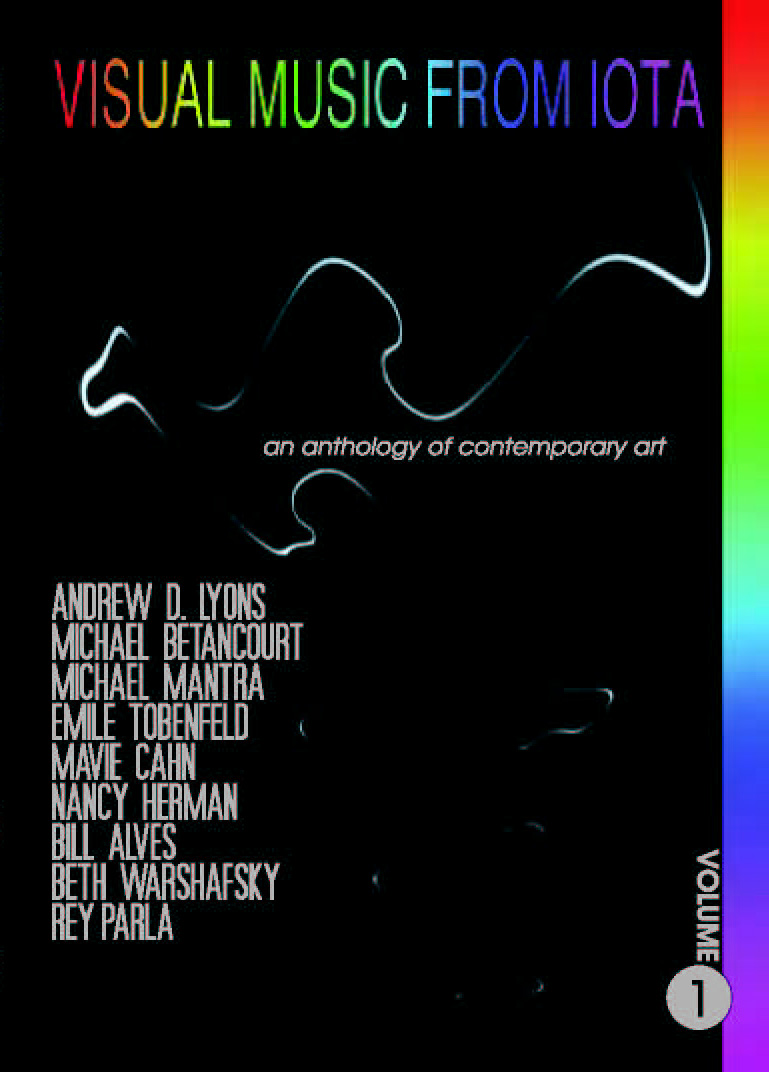
Visual Music from iota
Visual Music from iota
Compiled and Produced by Michael Betancourt
DVD – 63 minutes
Released – 2005
Price $25.00
Institutional price: $100
Includes works by Andrew D. Lyons, Michael Betancourt, Michael Mantra, Emile Tobenfeld, Mavie Cahn, Nancy Herman, Bill Alves, Beth Warshafsky, and Rey Parla.
Andrew D. Lyons
 LOUCID (2000-2001) is a 3D animation that was completed entirely within the Houdini 3D animation software. Unlike the artist’s previous work, Schwarzchild, Loucid dealt with the imaging of live instrumentation rather than midi instrumentation or Csound generated k-streams. Each musical track on the multitrack master was processed through banks of filters and Fourier analysis tools to extract the fundamental frequencies, amplitude and spectral envelopes that were fed into the various switches, counters, envelopes, and other functions in Houdini that animate Loucid. No key frames were used in the Loucid animation, and except for the camera motion, all animation was created algorithmically. More information can be found in Chapter Nine of the author’s thesis, and also in the Music VR DVD of related material available for download at www.tstex.com.
Michael Betancourt
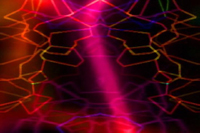 RADIO-ACTIVITY (2004) is a three movement video that was inspired by and uses plasmawave telemetry sent back to Earth by NASA’s Cassini mission and made into sound by Dr. Donald Gurnett at the University of Iowa. These noises provided the basis for the soundtrack. It is excerpted from the longer movie, Telemetry (2005). Radio-acitivity is both the activity that radios have and a the reality of celestial radiation.
 LOOK OUT (he’s got a knife) (2002) explores some aspects of the abstract film tradition. It examines the rhythmic and visual possibilities of editing using an existing piece of music composed in 1995 created by mixing different recordings of the same basic midi instructions (a digital “score”) played with the default midi tables in different computers. The resulting composition incorporates this variable tonal quality into itself, and is reflected in the title. It is edited on multiple levels.
Michael Mantra
 PEW (2003) is a music video for an ambient track called View. View is from the album Forest on the Mountain Within album. Michael Mantra, Marco Upp, and John Now recorded this album in 1989 and the album was released on the Tranquil Technology Music label in 1990. View is a video gradient 90 degrees to the audio gradient that affects an atonement of the hemispheres. With stereo headphones and a bean bag, this multimedia experience leverages changes in neurochemical balances and brain wave patterns. An electronic chill out room on a DVD. Because of this it is advised not to play this ambient video while operating a motor vehicle, aircraft, marine craft or extraterrestial vehicle. This ambient video track of Illuminated Music is dedicated to world peace and the end of all war.
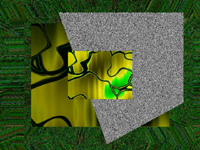
FMW 02 (2003) is an experimental music video for an ambient track called Forest on the Mountain and this track is from the album Forest on the Mountain Within album. Michael Mantra, Marco Upp and John Now recorded this album in 1989 and the album was released on the Tranquil Technology Music label in 1990. FMW 02 is a video gradient 90 degrees to the audio gradient that affects the balance of the listener’s hemispheres. FMW 02 is an integration of organic and digital chaos that over rides cultural indoctrination. FMW 02 is all about the personal empowerment of the listener. With stereo headphones and a bean bag, this multimedia experience leverages changes in neurochemical balances and brain wave patterns. An electronic chill out room on a DVD. Because of this it is advised not to play this ambient video while operating a motor vehicle, aircraft, marine craft or extraterrestrial vehicle. This ambient video track of Illuminated Music is dedicated to world peace and the end of all war.
Emile Tobenfeld
 TRANQUILITY AND STIMULATION (2004) was recorded live in concert with the Lothars, an improvising electro-acoustic band based in the Boston area. The title describes my reaction when viewing the work when I selected it for this compilation. I perform these improvisations with 4 DVD players, one or two video mixers, and a notebook full of DVDs that I create on the computer from video and still imagery. I don’t approach these performances with a fixed notion of what imagery I am going to use, and serendipity plays a great role in the images and image combinations that are used in any given performance. I react to the music from moment to moment with my video mixing, and react to the evolution of the music in mood and form with my choice of source materials. The piece contains many images of dancer Claire Barrett taken at a previous performance. Special thanks to the Lothars and to Claire for their contributions to the piece.
Mavie Cahn
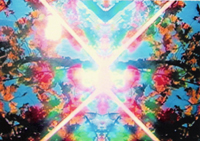 PRISMS (2004) was inspired by the Art of Light and Movement. Mavie investigates the rays of light that pass through the leaves of an Oak tree one fall afternoon in Woodstock, New York. The result is an apparition of a series of colored bands arranged in their respective wavelengths and exhibitions of crystalline images whose lateral faces meet at edges that are parallel to each other.
 GREYHOUND (2004) is a symphony of moving lights, lines, and constantly changing abstract and recognizable images juxtaposing human and structural elements, while invoking a mysterious world connected to ours but different from it. A composition in real time movement creating a subjective but familiar melody.
Nancy Herman
 WHAT MIGHT HAVE BEEN (2004) is a stab at trying to imagine what a visual music instrument that could be played in real time might look like. This color music would develop an emotional response in the viewer as a result of one color following another. I am experimenting with available software in order to see what possible forms these progressions of color might take. So far the color cycling in Bliss Paint seems to provide a way of moving colors through time in an interesting way. I like the continuous flow of color moving in and out of black which creates a pulse which forms a counterpoint to the beat of the music.
Bill Alves
 ALEPH (2002) was inspired largely by the geometric patterns of Islamic art, an art derived from the same proportions and numerical symbolism as the tuning systems of the ancient Greeks and Byzantines. In the music I have adopted similar proportions, known in music as just intonation, as well as intricate and slowly transforming patterns of pitches and timbres. Writers have connected the arithmetic symbolism of this art to the Arabic language and alphabet, the first letter of which, aleph, is a single vertical stroke. This stroke represents the descent of light, the “creative ray which initiates existence.” From this simple division follows the expansion into creation, and the connection of all people to the cosmological rhythms of number and pattern. Aleph was created with the povray computer graphics language and Csound computer music language. The music and images were composed in tandem.
Beth Warshafsky
 ANTHRODANCE VARIATION #3 (2004) is one of an on-going project using motion capture data to create experimental animations. The work is based on dance movement choreographed and performed by Beth Warshafsky and Ellen Scott at Siggraph. The motion is translated into data in a 3D environment and then reinterpreted in a creative process of filtering through 3D, 2D, video post-processing, and editing techniques.
Rey Parla
 SPORADIC GERMINATION (1994) began as a “pure accident.” It started as a documentary I was shooting on my brother Jose Antonio Parla’s painting process. My brother and I have been involved with “writing” (a.k.a. graffiti) for more than twenty years. Some of the first film strips were destroyed during experimentation, but were to our eyes the seeds of inspiration for what was to come. This short film is not meant to capture a narrative meaning or message; if it has one at all, I do not know. However, it does encapsulate several psychological, philosophical, and emotional states of consciousness that reveal themselves reflexively to a viewer or audience. This film-painting is structured and designed to be a conversation piece. This film is about the tactile as much as it is about the ineffable. It is about making a mark and erasing it; it is, in all, about the collective primitive unconscious, the beginning of language: sounds and writing.